
Most of us treat utensils as background objects—functional, forgettable, always there. A spoon scoops. A fork pierces. A ladle stirs. They live in drawers, clink in sinks, and disappear into the routine of meals. But every so often, someone looks at a simple utensil and sees something else: a clean surface waiting for color, a shape that can carry a story, a small object that can hold beauty as confidently as it holds food.
That’s where art is paint on utensils begins—not as a trend, not as a novelty, but as a quiet shift in attention. It’s the decision to turn the ordinary into the expressive. To take what’s already in your hand and give it personality.
This blog is about that idea: why painting utensils is surprisingly meaningful, how it connects craft and culture, what makes it hard (and worth it), and how you can approach it—whether you want a single painted spoon for your kitchen, a hand-painted set for gifting, or a whole collection that feels like functional sculpture.
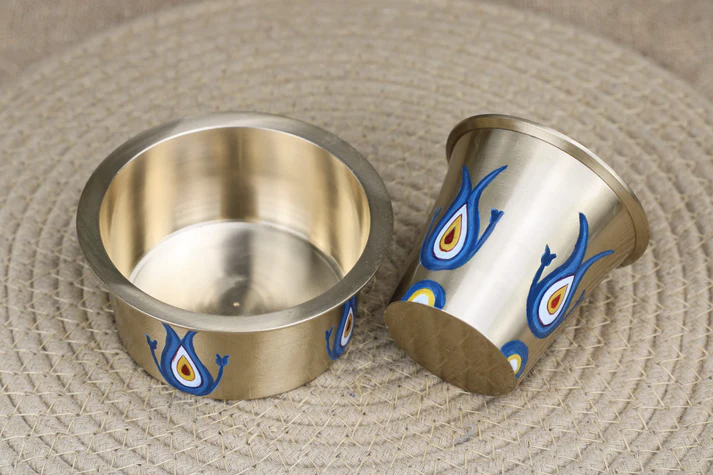
Why Paint on Utensils at All?
Painting on utensils might sound unusual at first. We’re used to canvases, paper, walls, and maybe fabric. Utensils are metal or wood. They’re used daily. They get washed. They face heat, moisture, oil, and abrasion. In other words, they are not friendly surfaces for art.
But that’s exactly what makes them powerful.
1) Because art doesn’t need permission
When you paint a utensil, you’re saying: art belongs everywhere. Not just in frames or galleries. Not just on “special” objects. Art can live in the drawer you open three times a day. It can show up in the serving spoon at a family gathering. It can be present in the quiet act of making tea.
2) Because a utensil is intimate
Utensils are handled constantly. They’re close to us. They carry touch—yours, your family’s, your guests’. A painted utensil becomes an intimate art object, one that is held rather than merely viewed.
3) Because function and beauty don’t have to compete
For centuries, cultures around the world have decorated functional objects—pots, bowls, textiles, tools, furniture. Painting utensils is a modern echo of that tradition. It’s practical artistry: beauty that doesn’t sit still.
The Poetic Side: Utensils as Symbols
A utensil is never just a utensil. It’s a symbol of care, nourishment, and routine. Think about it:
- A spoon can mean comfort: soup when you’re sick, dessert at celebrations, a mother feeding a child.
- A fork can represent choice, appetite, gathering, or even the formality of a meal.
- A knife can feel bold, sharp, decisive—yet also refined and ceremonial.
- A ladle feels communal, generous, made for sharing.
- A whisk suggests energy, motion, transformation (liquid into foam, ingredients into something new).
When you paint on these objects, you’re not just decorating metal or wood. You’re painting on symbols of living.
That’s why utensil art can feel surprisingly emotional. A small painted spoon can hold memory: a grandmother’s kitchen, the color of old tiles, the scent of spices, the sound of steel on steel.
The Challenge That Makes It Real
If painting utensils were easy, it would be common. The difficulty is part of its charm.
Utensils are used—and use is harsh.
Paint on a utensil has to contend with:
- Hand oils
- Water exposure
- Frequent washing
- Heat and steam
- Scratches and friction
- Food safety concerns (especially if painting areas that touch food)
So utensil painting lives in a careful balance between expression and durability. Many artists embrace this by painting on the handle only, leaving the food-contact areas untouched. Others create purely decorative utensils meant for display, gifting, or occasional ceremonial use.
Either way, there’s an honesty in the work: you’re creating art that must coexist with real life.
The Aesthetic: What Looks Good on Utensils?
Utensils have a narrow, curved geometry that pushes you toward smart design choices. Unlike a flat canvas, you’re working with a slim surface that’s often cylindrical or gently tapering.
Here are styles that work beautifully:
1) Minimal line art
Single-color strokes, fine patterns, delicate motifs—especially effective on wood handles or matte-coated surfaces.
2) Folk motifs and cultural patterns
Traditional geometric borders, florals, mandala-inspired elements, or motifs inspired by regional craft styles can look stunning on handles and create a strong identity.
3) Botanical themes
Leaves, vines, blossoms—these wrap naturally around a handle, making the utensil feel alive.
4) Tiny storytelling scenes
A house, a sunrise, a small cat, a cup of tea, a mountain line—micro-illustrations can make each utensil feel like a secret.
5) Abstract color blocking
Two or three strong colors, clean divisions, and a finished topcoat create a contemporary look that feels “designed,” not just decorated.
6) Calligraphy or words
A short word—home, serve, joy, chai, together—can turn a utensil into a message.
The Process Mindset: Treat It Like Craft, Not a Shortcut
To paint on utensils well, mindset matters as much as technique.
Start with respect for the object
Utensils already have a job. When you paint them, your design should honor their shape and ergonomics. A thick paint buildup where fingers rest will feel uncomfortable. A design that chips quickly will frustrate. The best utensil art feels like it belonged there all along.
Work with the shape, not against it
Curves distort designs. Wrapping patterns can look more natural than trying to place a “front-facing” artwork on a round handle. Think in bands, spirals, repeating motifs, and flowing lines.
Accept that handmade means imperfect—and that’s the beauty
Utensil art is not factory printing. Brush lines and micro-variations can be part of the charm. A set of utensils painted by hand shouldn’t look identical; it should look related—like siblings, not clones.
Food Safety and Practical Use (Important Considerations)
If you want your painted utensils to be used for eating or cooking, here are safe, practical principles (without getting overly technical):
- Avoid painting any surface that will touch food (the bowl of a spoon, the tines of a fork, the blade of a knife, the stirring end of a spatula).
- Keep paint to handles or clearly non-contact zones.
- Seal properly with a finish appropriate for the material and intended use (some finishes are decorative only).
- Prefer gentle cleaning (hand-wash, avoid soaking), especially for painted/finished parts.
- If you’re unsure, treat the utensil as decorative or occasional-use serving ware rather than daily cooking equipment.
If you tell me what kind of utensils you mean (wooden spoons? stainless steel? ceramic handles?), I can suggest a safer, more durable approach tailored to that material.
The Gift Value: Why Painted Utensils Feel Special
A painted utensil set is an underrated gift because it hits a rare combination:
- It’s personal
- It’s functional (at least partly)
- It’s artistic
- It’s small enough to be affordable
- It feels custom and thoughtful
Imagine gifting:
- A set of 4 painted teaspoons with each family member’s favorite color
- A serving spoon painted with floral motifs for a new home
- A ladle painted with a traditional pattern for someone who loves cooking
- A “chai spoon” painted with warm browns, golds, and little tea leaves
The gift isn’t just the utensil. It’s the time and attention you embedded into something they’ll repeatedly touch.
Building a Collection: From One Spoon to a Whole Series
Many artists begin with a single utensil as an experiment. Then something happens: the utensil becomes a “format,” like a mini canvas, and suddenly you want to explore it.
If you want to build a series, here are strong directions:
Series idea 1: The Seasonal Set
- Spring: greens and florals
- Summer: bright colors, citrus motifs
- Autumn: earthy tones, leaves, harvest patterns
- Winter: blues, whites, stars, minimal lines
Series idea 2: The Mood Set
Each utensil is a feeling:
- Calm
- Joy
- Energy
- Comfort
- Focus
Series idea 3: The Pattern Study
Try the same motif in multiple variations:
- Polka dots in 10 palettes
- Waves in different brush styles
- Mandala bands with changing geometry
Series idea 4: The Culture + Memory Set
Patterns inspired by:
- Childhood home tiles
- Textile borders
- Local folk art
- Festival colors
A series makes the work feel intentional and collectible. It also helps if you plan to sell them—people love sets that look curated.
Selling Painted Utensils: What Buyers Actually Want
If your goal is to sell, not just create, here’s what typically matters to buyers:
- Consistency: a recognizable style
- Finish quality: clean edges, smooth sealing, no sticky texture
- Durability clarity: are they decorative or usable?
- Care instructions: simple, honest, included
- Presentation: a small tag, pouch, or box makes it feel premium
- Story: why these colors, this motif, this theme?
People don’t only buy the object—they buy the feeling of having something handmade and meaningful in their daily life.
What This Art Really Is
At its best, painting on utensils is not “crafty decoration.” It’s a statement:
- that daily life deserves beauty,
- that art can be held,
- that small objects can carry big personality,
- and that creativity doesn’t need a perfect canvas to begin.
A painted utensil is humble, but it’s also rebellious in a soft way. It refuses to be only practical. It insists on being seen.
And sometimes, that’s all art needs to do: show up where we least expect it, and make the ordinary feel alive again.